One of the biggest challenges facing the pest control industry today is insecticide resistance. Around the world, many bed bug populations have developed resistance to chemicals that were once highly effective.
This has led many homeowners and businesses to ask an important question:
Can bed bugs become resistant to heat treatment in the same way they become resistant to chemicals?
The simple answer is no.
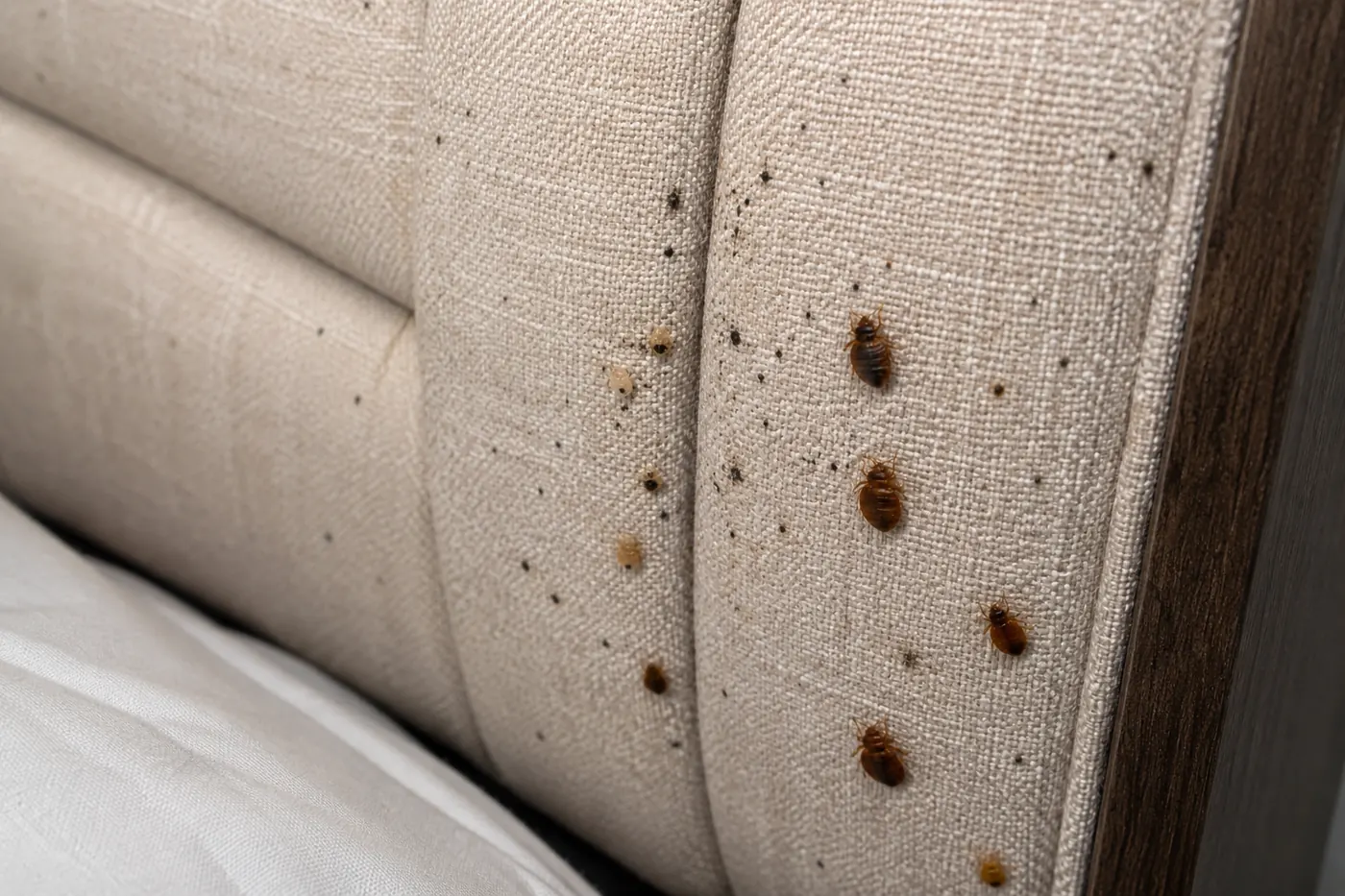
How Bed Bugs Become Resistant To Chemicals
Over many decades, bed bugs have been repeatedly exposed to insecticides. Like all living organisms, some bed bugs naturally possess traits that help them survive chemical exposure.
When a chemical treatment is applied, the most susceptible bed bugs die first. The more resistant individuals survive and reproduce, passing their resistance traits on to future generations.
Over time, this process has created bed bug populations that are increasingly difficult to control using insecticides alone.
Scientists have identified several resistance mechanisms in bed bugs, including elevated levels of detoxification enzymes such as esterases and oxidases. These enzymes help break down insecticides before they can cause lethal damage.
Some bed bugs have also developed changes within their nervous systems that reduce the effectiveness of certain chemicals, while others have developed thicker outer cuticles that make it harder for insecticides to penetrate their bodies.
Why Heat Works Differently
Heat treatment does not rely on a chemical reaction inside the bed bug.
Instead, professional heat treatment raises the temperature of an entire room or property to levels that are lethal to bed bugs and their eggs.
Once a bed bug's body reaches a sufficiently high temperature, essential biological processes begin to fail.
Proteins break down.
Cells become damaged.
Internal organs stop functioning correctly.
Eventually the insect dies.
Unlike chemicals, heat attacks fundamental biological systems that every bed bug requires to survive.
Why Bed Bugs Cannot Develop Heat Resistance
For bed bugs to become resistant to heat, they would need to evolve the ability to survive temperatures that are fatal to virtually all living cells.
This would require fundamental changes to their biology that are far beyond the resistance mechanisms seen with insecticides.
A bed bug may evolve better detoxification enzymes to deal with chemicals, but it cannot evolve a way to prevent its proteins, organs and tissues from breaking down at lethal temperatures.
Simply put, when temperatures are high enough, bed bugs die regardless of whether they are resistant to insecticides.
Heat Kills Every Life Stage
Another major advantage of professional heat treatment is that it targets all stages of the bed bug life cycle.
This includes:
- Adult bed bugs
- Juvenile bed bugs
- Newly hatched nymphs
- Bed bug eggs
Many chemical treatments struggle with eggs because the outer shell provides protection from insecticides.
Heat, however, penetrates these stages when the correct temperatures are achieved throughout the treatment area.
The Importance Of Professional Equipment
Not all heat treatments are equal.
Simply turning up the heating in a property will not eliminate bed bugs.
Professional bed bug heat treatments use industrial heating equipment, air movers, temperature monitoring probes and thermal imaging technology to ensure lethal temperatures are achieved throughout the treatment area.
Special attention must be given to furniture, mattresses, skirting boards, wall voids and other harbourage locations where bed bugs may hide.
The goal is to eliminate cold spots and ensure every area reaches temperatures capable of killing bed bugs and their eggs.
Why Many Specialists Prefer Heat Treatment
As insecticide resistance continues to increase worldwide, many bed bug specialists have turned towards heat treatment as one of the most reliable methods available.
Because heat does not rely on insecticides and because bed bugs cannot develop true resistance to lethal temperatures, professional heat treatment remains one of the most effective tools available for bed bug eradication.
When performed correctly by experienced technicians using professional equipment, heat treatment can provide rapid and highly effective control of bed bug infestations.
The Bottom Line
Bed bugs have become remarkably resistant to many insecticides through the development of detoxification enzymes, nervous system adaptations and other resistance mechanisms.
However, they cannot become resistant to lethal temperatures in the same way.
Heat attacks the fundamental biological processes required for survival, making professional heat treatment one of the most powerful and reliable methods available for eliminating bed bugs and their eggs.
This is one of the key reasons why industrial heat treatment continues to grow in popularity as a solution for bed bug infestations throughout the UK.