One of the most common questions people ask after discovering bed bugs is:
What temperature kills bed bugs?
The answer is simple: bed bugs begin to die when exposed to sufficiently high temperatures for a long enough period of time. However, the process is far more complicated than simply making a room feel hot.
To successfully eliminate a bed bug infestation, every life stage must be exposed to lethal temperatures, including adults, juvenile nymphs and eggs.
This is why professional heat treatment has become one of the most effective methods available for bed bug control.
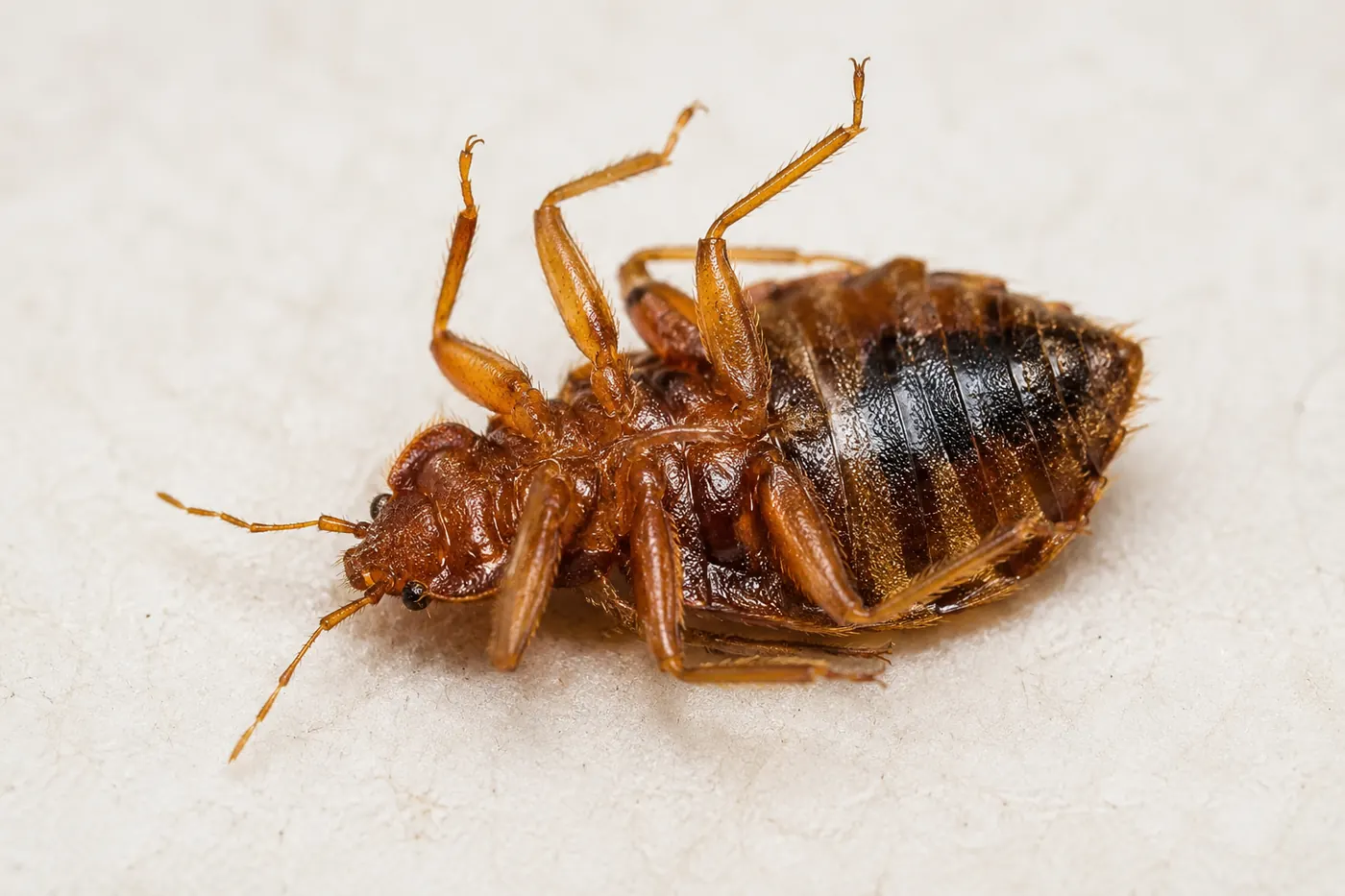
What Temperature Kills Adult Bed Bugs?
Research has shown that bed bugs begin to die when exposed to temperatures above approximately 45°C (113°F) for a sustained period.
However, professional treatments operate at significantly higher temperatures to ensure complete eradication throughout the treatment area.
Most professional bed bug heat treatments aim to achieve temperatures of between 60°C and 65°C (140°F to 149°F) within the treatment zone.
At these temperatures, adult bed bugs cannot survive.
What Temperature Kills Bed Bug Eggs?
Bed bug eggs are often the most difficult stage of the life cycle to eliminate.
The outer shell of the egg provides protection against many insecticides, which is one of the reasons chemical treatments often require multiple visits.
Heat treatment works differently.
When bed bug eggs are exposed to sufficiently high temperatures, the developing embryo inside the egg cannot survive.
This allows professional heat treatments to target eggs alongside adults and nymphs.
Why Room Temperature Is Not Enough
Many people ask whether simply turning up the central heating can eliminate bed bugs.
Unfortunately, the answer is usually no.
While a room may feel very warm to people, bed bugs often hide deep inside mattresses, furniture, wall voids, skirting boards and other protected locations.
These hiding places may remain significantly cooler than the surrounding air.
Professional heat treatments are designed to overcome this problem by using industrial heating equipment and powerful air movers to distribute heat evenly throughout the treatment area.
The Problem With Cold Spots
One of the biggest challenges in any heat treatment is eliminating cold spots.
A cold spot is an area that does not reach a lethal temperature.
If even a small number of bed bugs survive in a cooler area, the infestation may continue.
This is why professional technicians continuously monitor temperatures throughout the treatment using thermal probes and thermal imaging equipment.
The goal is to ensure that every potential harbourage reaches temperatures capable of killing bed bugs and their eggs.
How Professional Heat Treatments Are Monitored
Professional heat treatment involves much more than simply heating a room.
Technicians strategically place temperature sensors throughout the property to monitor conditions in different locations.
These sensors help identify any areas that may require additional heat circulation or attention.
Furniture may be moved, drawers opened and mattresses repositioned to allow heat to penetrate all potential hiding places.
The treatment continues until target temperatures have been achieved and maintained throughout the treatment area.
Why Heat Is So Effective
Unlike insecticides, heat affects all bed bugs regardless of their resistance levels.
Many modern bed bug populations have developed resistance to chemicals through biological adaptations including increased levels of detoxification enzymes such as esterases and oxidases.
Heat bypasses these resistance mechanisms completely.
When exposed to lethal temperatures, bed bugs cannot survive regardless of their chemical resistance status.
This is one of the reasons professional heat treatment has become increasingly popular throughout the UK and worldwide.
Can Bed Bugs Become Resistant To Heat?
No.
Bed bugs can develop resistance to insecticides because some individuals naturally possess biological traits that help them survive chemical exposure.
Heat works differently.
When temperatures become high enough, essential proteins break down, cells become damaged and vital bodily functions fail.
Bed bugs cannot develop true resistance to these lethal temperatures in the same way they develop resistance to chemicals.
The Bottom Line
Although bed bugs begin to die at temperatures above approximately 45°C, successful eradication requires much more than simply warming a room.
Professional heat treatments typically operate between 60°C and 65°C and are carefully monitored to ensure lethal temperatures reach every potential hiding place.
When performed correctly using industrial equipment, heat treatment remains one of the most effective methods available for eliminating bed bugs and their eggs.
This is why professional heat treatment continues to be trusted by homeowners, landlords, hotels and businesses throughout the UK.